


- Victorian Brickwork
- Garden Walls
- Conversions
- Building Alterations
- Boundary Walls
- Extensions
- Alterations
- Arches
- Decorative Brickwork
- Conservatory Bases
- Garages
- Brickwork Repairs
- Commercial Brickwork


When to Repoint Brickwork
Knowing when to repoint brickwork as a homeowner isn’t always easy. As a general rule of thumb, the lifespan of standard mortar can be anything from 20 to 30 years. However, the quality of the mortar and how well it was applied when the brickwork was laid will also make a difference.
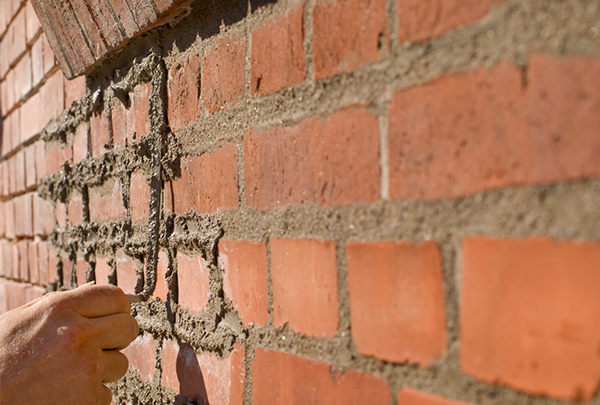
A quick and easy way to find out whether you need to repoint brickwork at home is to take a knife and see how easily it scrapes out pieces of the pointing. If it comes out relatively easily with little force required, it may have become compromised and should be inspected by a professional.
There are several other important warning signs to be on the lookout for, which in all instances could indicate it’s time to repoint your brickwork. Examples of which include damaged bricks, efflorescence, unsuitable pointing and signs of damp.
Damaged Bricks
If your brickwork is showing signs of damage, it could be compromising both the appearance and the structural integrity of your walls. Always consider damaged bricks an indication that urgent repairs may be necessary.
Failed or Unsuitable Pointing
Pointing that has failed or unsuitable pointing that was used in the first place can also become compromised over the years. This is often indicated by pointing that’s cracked, flaking or crumbling away from the wall.
Efflorescence
The term ‘efflorescence’ refers to the accumulation of white residue on the surface of brickwork, which isn’t necessarily harmful to a wall’s structural integrity, though can nonetheless be unsightly and undesirable.
An Inappropriately Cleaned Surface
Something as simple as an inappropriately cleaned surface can also be grounds for repointing, as to use an unsuitable cleaning product or method could cause significant damage to your bricks and compromise their integrity
Damp
If your brickwork is failing to provide your home with adequate protection from the elements, it could be an issue with the pointing or the bricks themselves. In any case, signs of damp indoors should be investigated and addressed at the earliest possible stage.