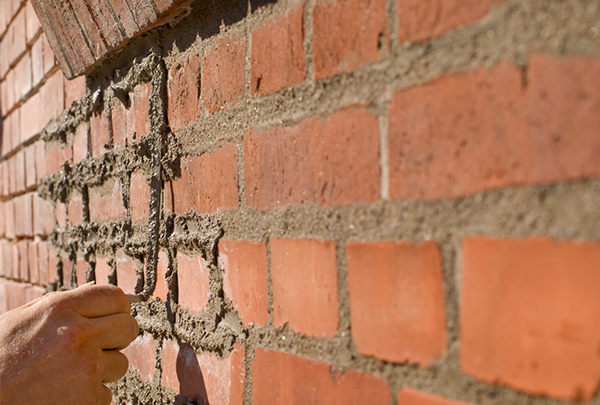
Kevin Nye Brickwork and Pointing is London’s leading team of lime mortar pointing and repointing specialists for all types of classical and historic properties.
Lime mortar pointing and repointing has been used in a wide variety of construction projects for thousands of years. The vast majority of Victorian properties in the UK feature lime mortar pointing, which are typically built with solid walls with no damp proof course. Along with supporting the bricks and plastering of the property, lime mortar pointing also protects the structure from natural movement during the changing seasons. As the mortar naturally adjusts, it protects the stones and bricks from cracking or breaking under pressure.
As leading specialists in all aspects of lime mortar pointing and repointing, we can address all types of minor and major issues involving Victorian homes and classical properties of all kinds.
Call anytime for an obligation-free consultation with lime mortar pointing and repointing.
What is lime mortar used for?
Lime mortar is a specialist type of pointing that can be used to securely connect a wide variety of masonry units. It has a much lower air content than contemporary mortar and therefore is capable of creating a stronger bond.
Where lime mortar has been used to secure masonry units together in a Victorian or period property of any kind, it is essential to ensure that lime mortar of equal quality is used when conducting repairs or component replacements.
Should I use lime mortar for pointing?
You should use lime mortar for pointing when working with certain types of stonework, as opposed to contemporary brickwork. If your home or business property currently features lime mortar, it is essential to ensure that any subsequent repair or maintenance work carried out utilises lime mortar of equal quality.
Lime mortar should also be used in any construction projects that involve a traditional or non-standard masonry units, in order to ensure the strongest possible bond and long lasting protective properties.
Is lime mortar better than cement?
Lime mortar is considered better than cement in that is more robust and provides longer-term protection than conventional mortar. Not only is lime mortar able to withstand exposure to harsh elements better than concrete mortar, but it is also the only mortar recommended for use when repairing and maintaining Victorian or period properties.
At Kevin Nye Brickwork and Pointing, our experience and expertise extend to all types of construction, repair and maintenance work for classical and contemporary homes in London and Surrey.
When should you use lime mortar?
The use of lime mortar is recommended when performing repairs, maintenance or conservation work on older properties, such as Victorian and Edwardian homes. Lime mortar has been used in the construction of homes and buildings for more than 6,000 years and is still considered the ‘gold standard’ in terms of durability, weather resistance and long-term reliability.
For more information on the use of lime mortar or to organise an inspection of your home, contact a member of the team at Kevin Nye Brickwork and Pointing today.
How do you fix crumbling mortar?
The key to successfully fixings crumbling mortar lies in first ensuring that all decaying, deteriorating, cracked and loose mortar is removed from the affected area. Otherwise, the freshly applied mortar may not create the strong and reliable bond needed to support a structural integrity of the surrounding stonework long-term.
Once the crumbling mortar has been removed, the dry mortar is mixed with water to create a smooth paste which is subsequently pressed into the gaps with specialist tools.
Does lime mortar stop damp?
Lime mortar has a lower air content than cement mortar and is therefore more capable of reducing damp. However, mortar alone isn’t capable of completely weatherproofing a property, as all aspects of its exterior structure will play a role in protecting its interiors.
If you have any questions or concerns regarding damp in your home, we strongly suggest organising an obligation-free inspection to identify the root cause of the problem at the earliest possible stage.
How can you tell if mortar is lime or cement?
It is actually quite difficult to tell the difference between lime mortar and cement mortar with a quick glance or cursory inspection. The two are very similar in appearance, though have completely different properties in terms of protection and resistance to the elements long-term.
If your home features Edwardian, Victorian or period brickwork/masonry, there is a strong chance the pointing between the masonry units will be lime mortar.
Repointing Stone Wall
Repointing a stone wall isn’t the same as working on a more conventional brick wall. This is where a detailed knowledge and understanding of the art of stonemasonry is essential, allowing for the repair and restoration of unique and often challenging stone structures.
At Kevin Nye Brickwork and Pointing, we know that the key to successfully repointing stone walls lies in acknowledging the uniqueness of each product we take on. Our bespoke brickwork and stonemasonry services are tailored from scratch, in direct accordance with our customers’ requirements.
Repointing a stone wall can be a complex and time-consuming process, which is not to be approached without relevant knowledge and experience. From boundary walls to architectural features to homes of distinction of all shapes and sizes, we can help bring your stone walls back to life and maintain their protective properties indefinitely.
Lime Mortar Pointing Cost Per M2
Lime Pointing & Repointing
Established in 1989, Kevin Nye Brickwork and Pointing has extensive experience in all aspects of lime pointing and repointing for all types of residential and commercial properties. We go the extra mile to combine premier property restoration and renovation services with unbeatable value for money, backing all lime pointing and repointing work carried out with an extensive warranty for total peace of mind.
Since going into business, we have relied heavily on word-of-mouth referrals to enable us to build an unrivalled reputation across London and Surrey. Our skilled team of tradespersons approaches every lime pointing and repointing with the kind of meticulous attention to detail our customers demand and deserve.
Where a classical or periodic property needs lime pointing or repointing, our team has the knowledge and experience to get the job done promptly, professionally and at an affordable price. Call anytime for an obligation-free initial consultation, or to discuss any aspect of our lime pointing and repointing services in more detail.
Lime Mortar Pointing Cost
Calculating lime mortar pointing costs means taking into account a series of important variables. The biggest influences on lime mortar pointing costs are the extent of the work to be carried out and the equipment and manpower needed to get the job done. Accessibility can also be a factor, such as in the instance of a difficult to reach chimney for which scaffolding is required.
As a very rough indication, a typical three-bedroom house in need of repointing without any major structural issues may cost from £3,000 to £10,000+ for the work to be carried out. If a large chimney stack on a period property needs to be repointed, costs could vary from £800 to £1,200 or more.
At Kevin Nye Brickwork and Pointing, we prefer to provide honest and accurate quotations as opposed to vague estimates. Call or e-mail anytime to discuss your requirements and to arrange an obligation-free initial quotation.
Lime Pointing Cost Per Square Metre
Lime pointing costs per square metre likewise vary in accordance with a number of factors. Primarily, the equipment and manpower needed to perform the necessary repairs will have an influence on pricing. If a specific section of your property’s exterior calls for repointing, ease of access (or otherwise) may affect the square metre pricing for the project.
Accurate quotations can therefore only be provided after conducting an inspection of the property and the surface to be worked on. As a general indication of what to expect, repointing a period property with lime mortar may cost anything from £60 to £80+ per square metre, in accordance with the size, location and requirements of the project.
If you have any questions or concerns regarding lime pointing cost per square metre for your home or business, we’d be delighted to provide you with an obligation-free consultation to discuss the options available.
Lime Mortar Repointing Cost
At Kevin Nye Brickwork and Pointing, we calculate all lime mortar repointing costs on the basis of each individual project’s requirements. Our flexible approach to the work we carry out enables us to minimise lime mortar repointing costs for the benefit of our customers.
While it is true to say that lime mortar repointing costs will always be higher than those of cement mortar repointing, lime mortar is considered vastly superior in terms of its strength and protective properties. In addition, lime mortar is the only mortar that should be used when working with period brickwork or classical stonework.
Book your pressure-free, obligation-free initial consultation with Kevin Nye Brickwork and Pointing to learn more about how we calculate lime mortar repointing costs for classical homes and businesses in London and Surrey.
Repointing Brickwork with Lime Mortar
When is repointing brickwork with lime mortar as opposed to cement mortar necessary?
If your home or business property was constructed using period brickwork/stonework, it most likely has lime mortar between the masonry units. In which case, repointing brickwork with lime mortar is absolutely essential, in the event that any repairs or maintenance become necessary.
Lime mortar looks similar to cement mortar, though has entirely different properties. It has a lower air content, it creates a stronger bond between the bricks and it has more extensive and long-lasting weather proof properties than cement mortar.
Repointing brickwork with lime mortar is therefore the only option where the existing brickwork is secured in place with lime mortar. To use an inferior adhesive product of any kind could result in weakening the structural integrity of your property’s exterior, or significantly reducing its lifespan.
Repointing Mortar Cost
At Kevin Nye Brickwork and Pointing, we understand the concerns of our customers when it comes to calculating repointing mortar costs. However, it is important to remember that irrespective of how much repointing mortar costs, it is a far safer and more cost-effective option than allowing your home’s exterior to fall into a state of disrepair.
Various factors that can influence repointing mortar costs, such as the square metre size of the surface to be repaired, potential accessibility issues and the materials required. As a very rough guideline, the cost of repointing a wall with modern cement mortar ranges from around £20 to £40 per square metre. This may increase to around £80 per square metre if high-quality lime mortar is needed, which is often the case when working on Victorian and Edwardian properties.
Call or e-mail anytime if you have any questions or concerns regarding repointing mortar costs in South London and Surrey.
Repointing Old Brick
An essential form of routine maintenance, repointing old brick walls as and when required can reduce the risk of major issues and costlier repairs at a later date. Sooner or later, even the most durable mortar succumbs to decay, deterioration and damage. Often as a result of year-round exposure to the elements, which is why some areas of brickwork on homes and businesses deteriorate faster than others.
Repointing old brick work provides a safe and cost-effective alternative to allowing the property’s exterior to fall into a state of disrepair. At Kevin Nye Brickwork and Pointing, we specialise in all aspects of pointing and repointing old brick structures, using only the highest-quality materials and components for unbeatable value for money.
Backed by more than three decades’ experience working with homes and businesses across the region, you know your property is in safe hands with the team at Kevin Nye Brickwork and Pointing.